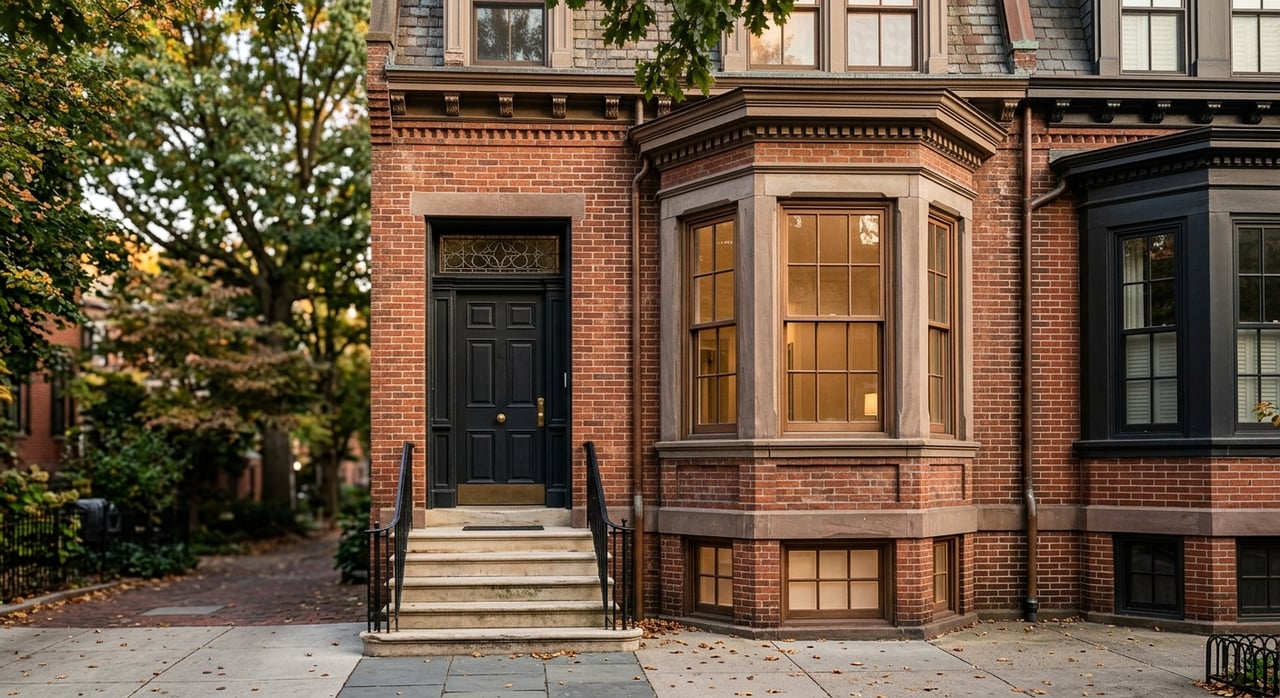
Thinking about a move to Alexandria, VA? You are not alone. Alexandria draws many buyers because it offers a close connection to the broader DMV, a wide mix of housing types, and several distinct areas that feel very different from one another. If you are relocating from out of town, the key is to understand how commute options, housing stock, and local transaction details fit your goals. Let’s dive in.
Why Alexandria appeals to relocators
Alexandria sits in Northern Virginia within the Washington-Arlington-Alexandria metro area. As of July 1, 2024, the city’s population estimate was 159,102, and it covers 14.94 square miles of land area. That smaller footprint can be helpful if you want a city with multiple housing options and access to the wider region.
The city is closely tied to major commuter routes and transit. Alexandria’s own city information highlights access via Route 1 from I-95, the George Washington Memorial Parkway from National Airport, and I-395 to Route 1 from Washington. In practical terms, that means your home search often depends as much on your day-to-day travel pattern as on the zip code itself.
QuickFacts also lists a mean travel time to work of 28.4 minutes and a median owner-occupied housing value of $696,800. Those numbers do not tell the whole story, but they do give you a useful starting point for setting expectations.
Alexandria is really several submarkets
One of the most helpful ways to think about Alexandria is not as one single market. It is a group of submarkets with different housing styles, price points, and ownership considerations. That matters if you are relocating and trying to narrow your search quickly.
Some areas are historic and preservation-sensitive. Others are newer and more transit-oriented. That split can shape everything from the type of property you can buy to the kind of updates you may be able to make after closing.
Historic Alexandria areas
Old Town is the original city site laid out by 1798, and much of it is included in a National Register Historic District. The local Old and Historic Alexandria and Parker-Gray districts are regulated by the Board of Architectural Review. If you are considering a home in these areas, it is smart to understand the property’s preservation context before you buy.
Del Ray and Rosemont also have older housing stock, but they developed differently. The city describes Del Ray as one of the area’s first commuting suburbs, with homes from the 1890s through the 1940s. Rosemont developed as a streetcar suburb in the late 1890s, and most of its houses were built between 1908 and 1930.
For you as a buyer, older homes can offer character and location advantages, but they may also require closer review of condition, layout, and renovation history. That is especially true if you are relocating and cannot visit every property in person.
Newer redevelopment areas
Newer Alexandria has a different feel. Potomac Yard now has the city’s newest Metro station, which opened in 2023 on the Blue and Yellow lines. WMATA says the station provides walkable access to the Virginia Tech Innovation Campus and dedicated bus lanes along Richmond Highway.
Eisenhower East and Carlyle are shaped by a design review framework tied to the city’s small area planning. The West End is also changing through AlexWest and the planned West End Transitway, a bus rapid transit corridor expected to begin operation in 2027. If you want a more recently built or transit-focused setting, these areas may be worth a closer look.
How to think about commuting in Alexandria
If you are relocating to Alexandria, commute planning should come early in your search. The city connects well to the broader region, but the best fit depends on how you expect to move around day to day.
King St-Old Town Station is a major transportation hub. It links to Amtrak, VRE, DASH, Metrobus, and a free daily trolley to Old Town and the Waterfront. For many buyers, that makes it one of the easiest places to understand first.
Braddock Road Station connects to Metroway and the Potomac Yard Trail. Eisenhower Avenue Station sits directly off I-495 and connects to REX and DASH. Van Dorn serves the Beltway side of the city, while Potomac Yard adds another key option for Blue and Yellow line access.
The city also continues to plan around high-capacity transit. Route 1 and Metroway, the Duke Street corridor, and the future West End Transitway are all part of that picture. If your work or lifestyle depends on regional access, transit should be part of your housing decision from the start.
Housing types and price expectations
Alexandria offers a broad range of housing products. The city’s zoning framework recognizes detached single-family homes, two-family dwellings, townhouses, and multi-family dwellings. That variety is one reason Alexandria can appeal to first-time buyers, move-up buyers, and relocators with different priorities.
The tradeoff is that pricing can vary a lot by property type. City planning data notes that the average assessed value of a single-family home was $940,375 in 2023, compared with $407,616 for a residential condominium. QuickFacts lists the median owner-occupied housing value at $696,800, which helps show how wide the range can be.
For many out-of-area buyers, condos can be a more accessible entry point. The city also notes that condominiums may be more affordable upfront, but HOA fees and special assessments add to the overall cost of ownership. That means your monthly payment analysis should include more than just price and mortgage.
Where lower-price inventory tends to cluster
City housing analysis shows that single-family homes assessed below $750,000 are mostly in Potomac West, Seminary Hill and Strawberry Hill, Alexandria West, and Landmark and Van Dorn. Residential condos assessed below $500,000 are concentrated in Landmark and Van Dorn, Alexandria West, Northridge and Rosemont, and Seminary Hill and Strawberry Hill.
That does not mean every home in those areas falls into those bands. It does mean that if you are relocating with a specific budget, your search may become more efficient when you focus on product type first, then area, then commute pattern.
What remote buyers should expect
If you are moving from another city or state, Alexandria can be challenging to evaluate from afar because the housing stock varies so much. A historic rowhouse, a condo in a common-interest community, and a newer transit-oriented home can involve very different questions.
That is why remote buyers often benefit from detailed listing media before deciding whether to travel for a showing. Video, floor plans, and 3D or virtual walkthroughs can help you compare layout, condition, and feel before you spend time on an in-person visit.
For relocators, this is where a process-driven team can make a real difference. Bediz Group works across DC, Maryland, and Virginia and supports remote buyers with practical guidance, strong local context, and the kind of visual marketing tools that help you make more informed decisions from a distance.
A few Virginia contract details to know
When you relocate to Alexandria, it helps to understand that some transaction details may differ from what you are used to in another state. In Virginia, the home inspection addendum is negotiated rather than automatic. The contract sets the number of days after ratification for the inspection deadline.
The inspection framework can cover a wide range of items, including structure, roof, HVAC, plumbing, drainage, windows, well or septic, lead paint, and radon. If issues are found, the buyer must deliver the report and a written addendum listing specific deficiencies, or send notice of termination, before the deadline.
The form also makes an important distinction. Deficiencies are items that could affect a reasonable buyer’s decision, while cosmetic matters, matters of preference, and systems that function properly but would not meet current code if newly installed are excluded.
Walk-through and condo disclosures
A pre-settlement walk-through is also standard in Virginia. The seller agrees to deliver the property in broom-clean condition and maintain it reasonably between contract and settlement, while you confirm it is in substantially the same condition, including any agreed repairs.
If you are buying a condo or another property in a common-interest community, the Virginia Resale Disclosure Act is especially important. The seller must provide a resale certificate. If no other period is specified in the ratified contract, you generally have three days from receipt to cancel the contract, and if the certificate has not been delivered, cancellation is available any time before settlement.
In a city like Alexandria, where condos and association-governed properties are common, this is not a minor detail. It can directly affect your review timeline and decision-making process.
How to relocate with less stress
A smooth Alexandria move usually starts with a simple framework. You do not need to know every neighborhood on day one. You do need to know your priorities.
Start with these questions:
- Do you want a condo, townhouse, or detached home?
- How important is Metro or Beltway access?
- Are you comfortable with older housing stock?
- Would you consider a historic district or preservation-sensitive property?
- Are HOA fees or resale disclosures likely to affect your budget or timeline?
Once those answers are clear, your search tends to become much more manageable. Alexandria makes more sense when you compare submarkets based on how you live, not just on what looks good in a map search.
If you are planning a move to Alexandria and want clear guidance on neighborhoods, commute options, condos, townhomes, or the buying process, Bediz Group can help you build a smart plan from the start.
FAQs
What should you know before relocating to Alexandria VA?
- Alexandria is best understood as several submarkets, including historic areas like Old Town and Parker-Gray, older streetcar-era areas like Del Ray and Rosemont, and newer transit-oriented areas like Potomac Yard, Carlyle, and parts of the West End.
How expensive is housing in Alexandria VA?
- QuickFacts lists a median owner-occupied housing value of $696,800, while city data shows average assessed values in 2023 of $940,375 for single-family homes and $407,616 for residential condominiums.
What commute options do buyers have in Alexandria VA?
- Buyers often compare access to King St-Old Town, Braddock Road, Eisenhower Avenue, Potomac Yard, and Van Dorn stations, along with connections to DASH, Metrobus, Amtrak, VRE, and major roadways like I-95, I-395, and I-495.
What should condo buyers know in Alexandria VA?
- Condo buyers should budget for HOA fees and possible special assessments, and they should understand that Virginia resale certificate timing can affect their contract review and cancellation rights.
What should remote buyers expect when moving to Alexandria VA?
- Remote buyers should expect to rely heavily on listing photos, video, floor plans, and virtual walkthroughs because Alexandria includes a wide range of home styles, ages, and ownership structures.