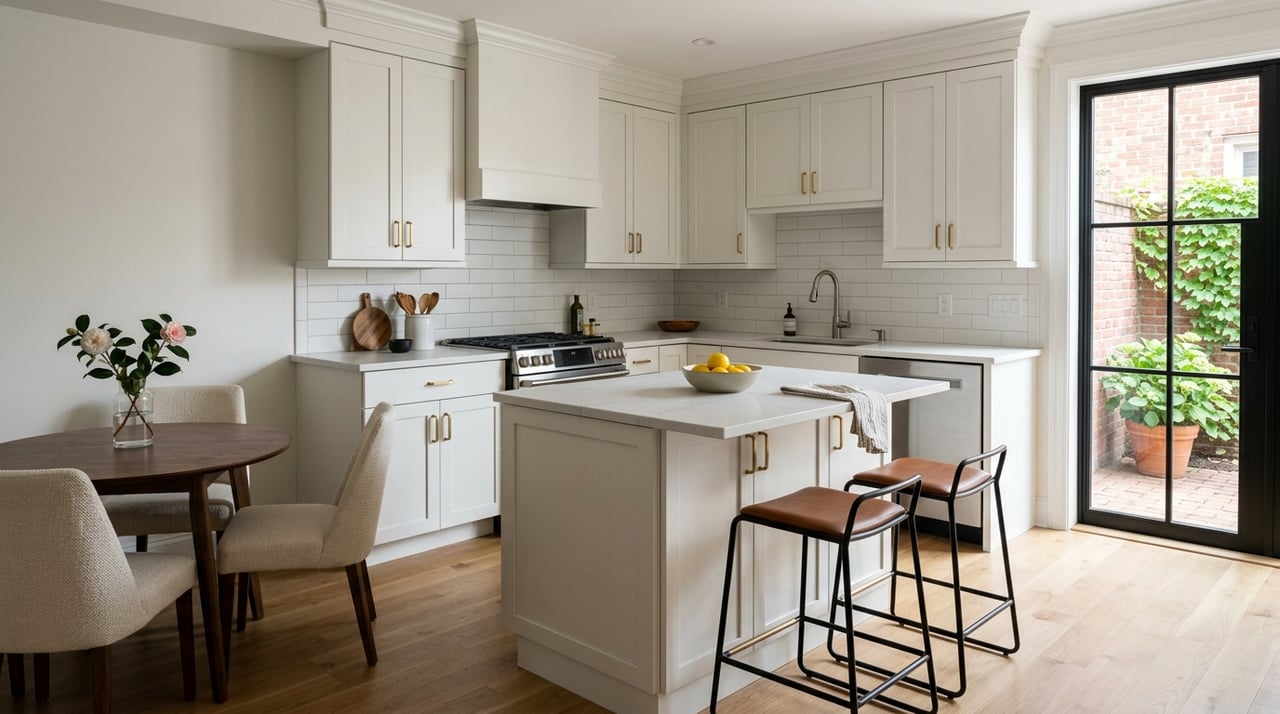
If the idea of selling your Capitol Hill rowhome feels overwhelming, you are not alone. Between pricing, prep work, contractor timing, and the quirks of a historic district, it is easy to feel like every decision carries extra weight. The good news is that a lower-stress sale is possible when you know what matters most and plan in the right order. Let’s dive in.
Why Capitol Hill rowhomes need a strategy
Selling in Capitol Hill is not quite the same as selling in other DC neighborhoods. According to Redfin’s latest Capitol Hill housing market data, the neighborhood was somewhat competitive in February 2026, with a median sale price of $842,000, median price per square foot of $578, and a median of 68 days to sell.
That matters because it points to a market where pricing and presentation both matter. Redfin also noted that homes were selling at roughly 1% below list on average, while hot homes could sell about 2% above list. In other words, great staging alone does not guarantee a quick or top-dollar result if the price misses the mark.
The broader DC market tells a similar story. DCAR’s February 2026 market report, cited in the same market overview, showed 68 average days on market and a 95.3% sold-to-list ratio across Washington, DC. For you as a seller, that means thoughtful prep should be paired with disciplined pricing from day one.
What makes Capitol Hill rowhomes unique
A Capitol Hill rowhome often sells on more than square footage alone. The Capitol Hill Historic District brochure from DC’s Office of Planning describes a large, cohesive historic district with roughly 8,000 buildings and many intact 19th-century row houses, including notable brick Queen Anne examples.
That historic context affects how buyers see value. Original brickwork, façade details, windows, stairs, and overall proportions can all shape first impressions. If your home has preserved character, that is not just architectural background. It is part of the story buyers are paying for.
The neighborhood setting also matters. A recent Capitol Hill neighborhood profile from WDCEP highlights the area’s identity around historic architecture, Eastern Market, Barracks Row, and Union Station, and notes a Walk Score of 99. When your home is marketed well, buyers are not only evaluating the house itself. They are also considering the ease of daily life in a walkable historic neighborhood.
Start with the right pre-listing priorities
If you want less stress, resist the urge to do everything. Focus first on the tasks most likely to improve your listing photos, showing experience, and buyer confidence.
Based on NAR’s 2025 Profile of Home Staging, 83% of buyers’ agents said staging made it easier for buyers to visualize a future home. The most commonly staged rooms were the living room, primary bedroom, and dining room, which is especially relevant in rowhomes where flow and room scale can strongly influence perception.
The same NAR research found that internet-using buyers rated these listing assets as very useful:
- Photos: 83%
- Detailed property information: 79%
- Floor plans: 57%
- Virtual tours: 41%
For a Capitol Hill rowhome, those numbers are a great reminder that buyers often form opinions before they ever book a showing. A polished launch can reduce stress later by attracting more qualified interest upfront.
Focus on what buyers notice first
Before listing, your highest-value prep tasks usually include:
- Fixing visible repairs
- Refreshing paint or finishes where needed
- Reducing clutter
- Creating clear room function
- Improving lighting and overall cleanliness
These steps matter because they improve your online first impression and make the home easier to understand in person. In a neighborhood where architecture and layout are part of the appeal, clarity goes a long way.
Build listing assets that do real work
A strong listing package should help buyers understand the home before they walk through the front door. That is especially important with rowhomes, where multi-level layouts, narrower footprints, and outdoor spaces can be hard to read from photos alone.
This is where a full-service, design-aware approach can lower your workload. Bediz Group’s in-house support includes staging, professional photography, video, Matterport tours, floor plans, print collateral, weekly email marketing, and Fix-to-List project coordination, all of which can help make your launch more organized and less reactive.
Be careful with exterior projects
One of the biggest stress points for Capitol Hill sellers is timing work correctly. If you are planning repairs or updates before listing, it is important to understand which projects may trigger historic review or permit requirements.
According to DC’s Office of Planning guidance on building permits for historic property, permits are required for new construction, demolition, additions, alterations, and repairs, and historic preservation review is required when a building permit is needed for work affecting the exterior appearance of a historic property.
That means exterior work can create scheduling risk if you wait too long to start. Even fairly modest projects may need a permit path. DOB guidance for Historic Property Special Permits includes examples such as brick pointing, fence repair or replacement, in-kind roofing and coping, gutters and downspouts, patios, sheds, and retaining walls.
Interior updates are often simpler
The good news is that many interior cosmetic projects are easier to manage. DC’s preservation review exemption guidance says interior alterations and non-structural interior demolition generally do not require historic preservation review.
If your goal is to lower stress and improve presentation quickly, this can help you prioritize. In many cases, interior paint, lighting updates, flooring touch-ups, and cosmetic improvements can be completed faster than exterior-facing work.
A grant may help some owners
If you are an owner-occupant planning eligible repairs, there may be financial help available. DC’s Historic Homeowner Grant Program offers up to $50,000 for qualifying exterior and structural repairs to primary residences in historic districts, with work managed by a licensed contractor and not already started or completed.
This will not apply to every seller, but it can be worth exploring early if your pre-listing plan includes qualifying work. Timing matters, so it is not something to leave until the last minute.
Price for the market you have
A lower-stress sale usually starts with realistic pricing. In a somewhat competitive market, overpricing can lead to extra days on market, more interruptions, and eventual price reductions that make the process feel harder than it needed to be.
The latest Capitol Hill market snapshot from Redfin showed a median of 68 days to sell, while Redfin’s three-month competitiveness view put homes at about 64 days on market. It also noted that hot homes could move in about 18 days, which suggests that well-positioned listings can still stand out.
For you, the takeaway is simple: pricing should reflect both your home’s strengths and current buyer behavior. A rowhome with strong condition, appealing historic details, and a polished marketing package may have a different launch strategy than a home that needs work or has a more niche layout.
Why full-service support reduces stress
Many sellers do not just need marketing. They need someone to keep the entire process moving in the right order.
According to NAR’s 2025 buyer and seller research, 90% of sellers worked with a real estate agent, and sellers commonly relied on professionals to price homes competitively, market the home, meet a specific timeline, and identify what needed fixing before listing. NAR also found that 88% of sellers listed on the MLS.
That lines up with what many Capitol Hill sellers experience in real life. You may be balancing contractors, cleaning, staging, scheduling, and paperwork at the same time. Having a team that can guide pricing, coordinate prep, and manage marketing assets can make the process feel far more manageable.
What a smoother selling process looks like
In practical terms, less stress often comes from a clear sequence:
- Review pricing and timing.
- Identify the highest-impact prep items.
- Separate fast interior updates from slower exterior work.
- Coordinate staging and listing media.
- Launch with strong visuals, floor plans, and clear property details.
- Manage showings and feedback with a plan.
This kind of structure helps you avoid rushed decisions and last-minute surprises. It also gives buyers a more confident impression of the home.
Sell the home and the setting
Capitol Hill buyers are often drawn to both architecture and lifestyle. That means your sale strategy should present the rowhome as part of a larger neighborhood experience.
The WDCEP profile notes Eastern Market’s long-standing role in the neighborhood and its year-round draw, along with nearby destinations like Barracks Row and Union Station. Combined with the area’s Walk Score of 99, this supports marketing that highlights walkability, historic character, and access to local amenities in a factual, location-based way.
That kind of positioning helps buyers understand why Capitol Hill rowhomes continue to attract attention. It also reinforces value beyond the walls of the property itself.
Final thoughts on selling with less stress
Selling a Capitol Hill rowhome does not have to feel chaotic. When you focus on the right prep, understand historic-district timing, build strong listing assets, and price with discipline, the process becomes much more predictable.
If you are thinking about your next move, Bediz Group can help you create a smart, low-friction plan for preparing, pricing, and marketing your home with the kind of hands-on support that makes a difference.
FAQs
How long does it take to sell a Capitol Hill rowhome?
- Recent Redfin data for Capitol Hill showed a median of 68 days to sell, while its three-month competitiveness view put homes at about 64 days on market, with some hot homes moving faster.
Do Capitol Hill rowhome updates need historic review?
- Not all of them. DC’s Office of Planning says interior alterations and non-structural interior demolition generally do not require historic preservation review, while exterior work that needs a permit generally does.
What prep matters most when selling a Capitol Hill rowhome?
- The most important pre-listing tasks are usually visible repairs, clean finishes, decluttering, staging, and strong listing assets like photos, floor plans, and detailed property information, supported by NAR’s 2025 staging research.
Why should you use a full-service agent to sell a Capitol Hill rowhome?
- NAR’s 2025 seller research shows sellers commonly rely on agents to price competitively, market the home, stay on schedule, and identify repairs before listing, which is especially helpful when a rowhome sale involves prep, permits, and vendor coordination.