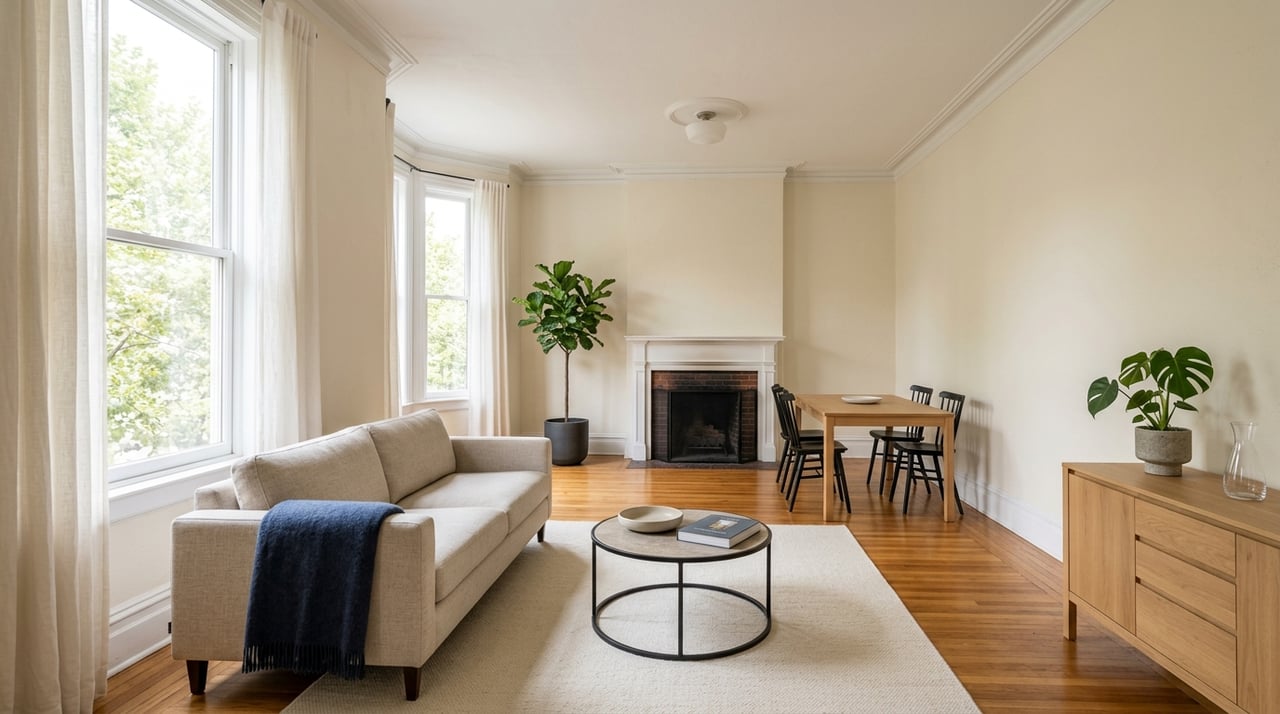
If you are getting ready to sell in Logan Circle, you are not just listing square footage. You are presenting a home in one of Northwest Washington’s most recognizable urban neighborhoods, where historic character, compact layouts, and lifestyle appeal all shape buyer decisions. In a market where homes are not always moving instantly, the right staging strategy can help your property feel clearer, more polished, and more memorable from day one. Let’s dive in.
Why staging matters in Logan Circle
Logan Circle sits within a dense Near Northwest area with a housing mix that includes rowhomes, townhouses, mid-rise apartments, and high-rise buildings, according to the DC Office of Planning. That mix means buyers often compare very different homes in a short period of time, so presentation matters.
The neighborhood’s historic identity also plays a major role. The Logan Circle Historic District includes more than 100 residences built between 1875 and 1900, and it is known for late Victorian and Richardsonian architecture. If your home has original details, staging should support those features rather than compete with them.
Current market conditions make this even more important. Recent Logan Circle market data shows a median sale price of $825,000 in March 2026, a median of 92 days on market, and a 98.8% sale-to-list ratio. That tells you there is still demand, but a strong launch and disciplined presentation can make a real difference.
Stage for architecture first
In Logan Circle, many sellers own homes with details that buyers want to see clearly. Think tall windows, original moldings, fireplaces, bay fronts, brick walls, and historic proportions. Your staging should help those elements stand out.
That usually means using furniture that fits the room instead of overfilling it. Clean sightlines, lighter visual weight, and fewer distractions can help buyers notice scale, light, and craftsmanship more easily. In a neighborhood known for 19th-century residential architecture, this approach helps the home feel authentic and inviting.
Keep period details visible
If you have preserved features, avoid blocking them with oversized seating, heavy decor, or too many accessories. A fireplace mantel, arched opening, or original trim often adds more value visually than an extra accent chair.
Simple, neutral styling tends to work best. The goal is not to erase personality completely. It is to make the home easier for a buyer to understand in person and online.
Let rooms breathe
Many Logan Circle homes have charm, but not always oversized rooms. Pulling back on furniture can improve flow and make circulation feel more natural. Buyers should be able to walk through the home and immediately understand how each area functions.
This matters in photos too. A room that feels open on camera tends to attract more interest before a showing is ever scheduled.
Tailor staging to rowhomes and condos
Logan Circle includes both classic rowhomes and smaller condos or flats, so staging should reflect the type of home you are selling. The same formula does not work for every listing.
For rowhomes, the focus is often on rhythm and flow from one level to the next. For condos, the priority is usually making each square foot read clearly and efficiently.
Rowhome staging tips
In a rowhome, buyers are often looking at layout, natural light, and architectural continuity. You want each room to feel purposeful without interrupting the home’s character.
A few smart moves can help:
- Use scaled furniture that leaves clear walkways
- Keep window areas open to highlight natural light
- Minimize extra pieces that make rooms feel narrow
- Use neutral bedding and textiles to create a calm visual palette
- Add subtle decor that supports, not distracts from, original details
Condo staging tips
In condos and smaller flats, clarity is everything. The DC planning document points to the area’s dense housing stock, and that makes efficient use of space especially important.
Try to define the living, dining, and work zones clearly. Use fewer, better-proportioned pieces, and remove anything that makes the home feel crowded. According to NAR’s staging guidance, decluttering, depersonalizing, cleaning, repairing, and updating are all core parts of the process, and those steps are especially useful in compact urban homes.
Prioritize the rooms buyers notice most
If you are wondering where to spend your time and money, start with the rooms that shape buyer perception fastest. According to the National Association of Realtors’ 2025 Profile of Home Staging, buyers’ agents identified the living room, primary bedroom, and kitchen as the most important rooms to stage.
That is helpful if you do not want or need a full-home staging plan. You can focus on the highest-impact spaces first and still strengthen the overall presentation.
Living room
The living room often sets the tone for the entire showing. It tells buyers how the home lives day to day and whether the main gathering space feels comfortable and functional.
Use seating that fits the room, keep surfaces clean, and limit visual noise. In Logan Circle, where buyers may be comparing multiple urban properties online in one sitting, a strong living room photo can help your listing stand out.
Primary bedroom
Your primary bedroom should feel restful, simple, and spacious. Neutral bedding, edited furniture, and clear nightstand surfaces usually go a long way.
If the room doubles as storage overflow, now is the time to clear it out. Buyers respond better when the room feels like a true retreat rather than a catch-all.
Kitchen
Kitchens do not need elaborate styling to photograph well. They need to look clean, bright, and functional.
Clear countertops, remove magnets and paper clutter, and keep only a few intentional accents. If your kitchen connects to living or dining space, make sure the transition feels cohesive.
Start with pre-listing basics
Before you think about decor, handle the fundamentals. The same NAR staging report found that the most common seller recommendations are decluttering, cleaning the entire home, and improving curb appeal.
Those steps are not glamorous, but they have a huge effect on both photography and showings. Buyers notice cleanliness and condition right away.
A practical prep sequence looks like this:
- Fix obvious defects
- Depersonalize the home
- Deep clean every room
- Edit furniture for better flow
- Stage the key rooms
- Photograph and launch while the listing is fresh
This order helps you avoid spending money in the wrong place. It also gives your marketing assets a better chance to perform strongly from the start.
Use digital assets to support the staging
Even the best staging can fall flat if the listing package is weak. Today’s buyers usually begin online, and your photos and floor plan often shape whether they book a showing.
According to NAR’s 2025 Home Buyers and Sellers Generational Trends report, 83% of internet-using buyers found photos very useful, 57% said the same about floor plans, 41% valued virtual tours, and 29% valued videos. Those numbers make one thing clear: digital presentation is not optional.
Professional photography is essential
Your staging should be designed with photography in mind. Clean lines, clear pathways, balanced lighting, and thoughtful furniture placement all help a home read better on screen.
In Logan Circle, the photo package should show the best architectural angle, the quality of light, and the overall flow of the home. It can also help to capture how the property relates to its block and nearby lifestyle context, especially in a neighborhood connected to the active 14th Street NW corridor.
Floor plans help buyers understand space
In condos, English basements, and multi-level rowhomes, floor plans can answer questions that photos alone cannot. They help buyers understand layout, room relationships, and circulation before they visit.
That matters because buyers often make quick decisions about which homes are worth touring. A clear floor plan can reduce confusion and increase confidence.
Launch strong from day one
According to NAR’s online visibility guidance, the first few days after launch carry outsized weight because buyers rely on saved searches, listing alerts, and social feeds. That means you want staging, photos, copy, and digital assets ready before the listing goes live.
A stale listing is harder to revive than a strong listing is to launch. In a market with more measured pace, early momentum matters.
Is full staging always necessary?
Not always. The right answer depends on the property, the condition, whether it is occupied or vacant, and your budget.
NAR notes that staging can be self-directed, professional, or virtual, as outlined in its home staging resources. For some Logan Circle sellers, a lighter-touch plan may be enough. For others, especially vacant condos or homes with tricky layouts, more complete staging may make the space easier to understand.
The encouraging part is that staging does not always require an all-or-nothing approach. In the same 2025 NAR report, 49% of agents said staging reduced time on market, and 29% said it increased dollar value offered by 1% to 10%. The reported median cost for a professional staging service was $1,500, which gives sellers a practical benchmark as they weigh options.
A smart Logan Circle staging mindset
In Logan Circle, successful staging is rarely about making a home look flashy. It is about making the home feel legible, polished, and aligned with what buyers are already looking for online and in person.
That means honoring historic character, clarifying smaller footprints, prioritizing the right rooms, and pairing the physical prep with strong marketing assets. When those pieces work together, your home has a better chance to attract attention quickly and convert that attention into strong interest.
If you are planning a sale in Northwest Washington and want a strategy that covers prep, staging, photography, floor plans, and launch timing, the Bediz Group can help you build a plan that fits your home and your goals.
FAQs
Which rooms matter most when staging a Logan Circle home?
- The living room, primary bedroom, and kitchen matter most, based on the National Association of Realtors’ 2025 staging report.
Is professional staging necessary for every Logan Circle listing?
- No. Some homes benefit from full professional staging, while others can perform well with partial, self-directed, or virtual staging depending on layout, condition, and budget.
What should you do before listing photos in Logan Circle?
- Start with repairs, depersonalizing, deep cleaning, decluttering, and editing furniture so the space feels clear and easy to understand in photos.
Why do floor plans help sell Logan Circle condos and rowhomes?
- Floor plans help buyers understand layout, room connections, and flow, which is especially useful in compact condos and multi-level homes.
How important are listing photos for Logan Circle sellers?
- They are extremely important because most buyers begin their search online, and NAR reports that photos are the most useful online feature for internet-using buyers.