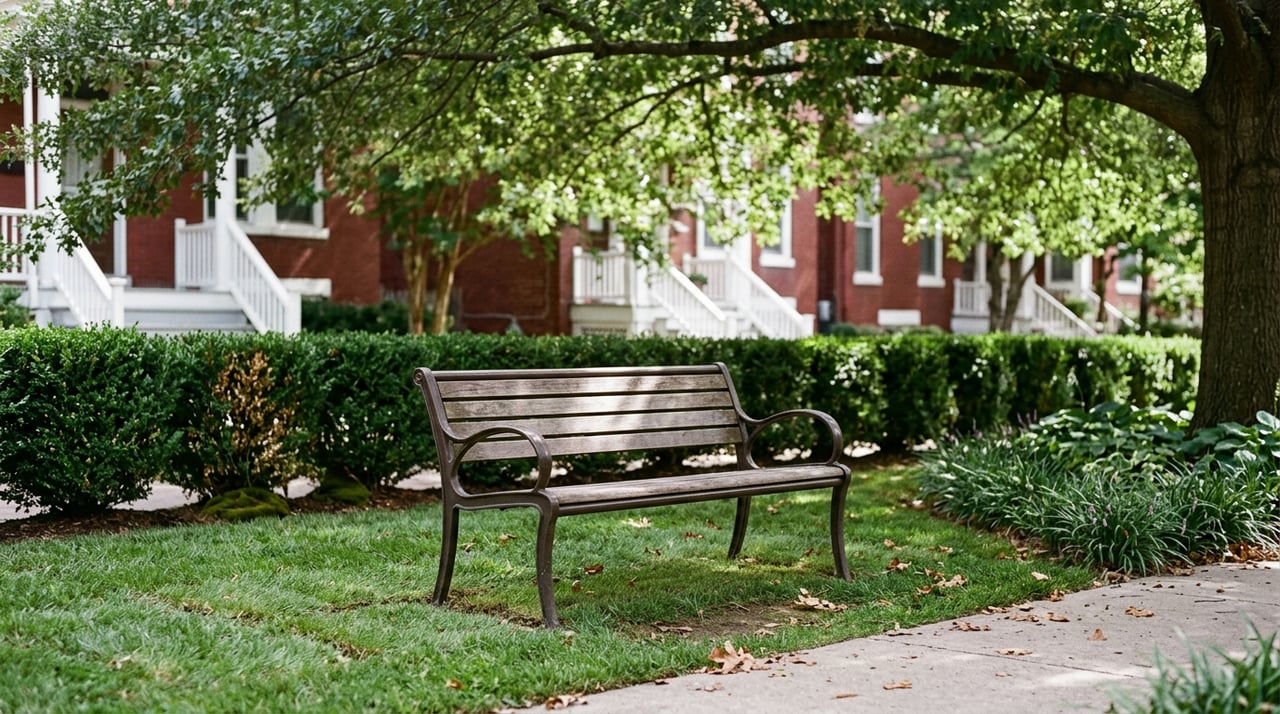
For nearly three months this spring, the middle of the neighborhood was gone. Chain-link fencing wrapped the entire park at Logan Circle from March 30 through mid-June, and anyone who lives within a few blocks had to reroute the dog walk, find another bench to eat lunch on, or just look at the statue of General John A. Logan through a construction barrier instead of grass.
Now the fence is down, the turf is green, and the walkways are new. The renovation refreshed the park's surfaces and furnishings.
What Actually Got Rebuilt
The project was part of a federal push under Executive Order 14252, "Making the District of Columbia Safe and Beautiful," with an eye toward the city's semiquincentennial preparations this year. On the ground, that meant refinishing the John A. Logan equestrian statue at the center of the circle, tearing out the old exposed-aggregate concrete walkways and pouring new ones, restoring turf and landscaping, installing new irrigation, upgrading lighting, replacing trash receptacles, and repairing benches and other furnishings.
That's a real list. If you walk the circle today, the paths are smoother, the grass is thicker than it's been in years, and the statue itself looks cleaner than most residents can remember. None of that is cosmetic in the throwaway sense. Concrete that cracks and drains that clog are genuine maintenance problems, and the National Park Service closed the park long enough to actually solve them rather than patch around them.
How the Park Is Used
Here's the piece worth knowing if you live near the circle: the park serves several day-to-day uses beyond being a monument.
A critique published by Greater Greater Washington as the park was about to reopen described how residents use the space. Logan Circle is the closest thing the neighborhood has to a backyard. The grass around the statue functions as an unofficial dog park, worn down in patches from years of pets running loose there. The Stonewall Bocce league plays on that same turf. People picnic, read, and meet friends on it the way people in rowhouse neighborhoods with no yards depend on shared green space. The article made the case that the renovation restored what was there, but didn't rethink the park around how residents actually treat it.
The same piece reported that cars have driven into Logan Circle's park repeatedly over the years, with incidents recorded in 2012, 2018, 2023, 2024, and 2025, often more than once in a given year. According to that account, the damage has landed on fences, benches, trees, and turf rather than people. The renovation replaced those damaged items. It did not add bollards or any other vehicle barrier.
The Neighborhood Didn't Wait Around
While the park was closed, the rest of the neighborhood kept its usual rhythm, and the timing lined up almost perfectly. The fencing came down in mid-June, and by August 1, Logan Circle was back to hosting Dog Days, its annual sidewalk sale, for the 26th year running. District Bridges, the organization that runs the neighborhood's Main Street program, put it on as always, and it drew the same kind of foot traffic up and down the retail strip that the event always has.
That six-week gap between the park reopening and Dog Days matters more than it looks. It means the biggest annual event tied to the commercial corridor happened with the neighborhood's central gathering space finally back in play, rather than boarded off. If you were out shopping the sidewalk sale this year, you were also probably one of the first waves of people back on the new walkways with a coffee or a dog leash in hand.
What Else Changed On 14th Street This Year
A few other things shifted around the neighborhood while the fencing was up, worth knowing if your last lap around the block was a while ago.
- Pitango Gelato opened at 1802 14th Street NW in late February, taking over the space that had been Lou Lou Boutique. It's the gelateria's eighth location and its return to the corridor after the brand's original DC roots there years earlier. The shop runs just over 1,000 square feet with seating for up to ten people inside, a small footprint but a full menu of scratch-made gelato and locally roasted coffee.
- Studio Theatre, a block over at 1501 14th Street NW, announced its 2026-2027 season this spring, and it's a notable one. It's the final season under David Muse, who has run the theater's artistic direction for 17 years. The season opens with Sanaz Toossi's "Wish You Were Here," directed by Sivan Battat, and includes Bess Wohl's Pulitzer Prize-winning "Liberation" later in the year. Subscriptions are on sale now.
Neither of these is a dramatic transformation of the block. But if your mental map of 14th Street still has a boutique where the gelato shop is, or if you haven't checked what Studio has coming up since the season announcement in May, both are worth an update.
Logan Circle After the Renovation
This spring's project gave Logan Circle a visible refresh.
The turf is better. The statue is cleaner. Those are the changes you'll see when you walk past it.
If you're the kind of resident who tracks details like this because you're weighing whether now's the moment to sell that rowhouse on a quiet side street, or you're curious what a place near a freshly restored park is actually worth this year, that's a conversation worth having with people who watch this corridor as closely as you do. Bediz Group has been working Logan Circle and the surrounding DC market long enough to know the difference between a cosmetic update and a real one, in a park and in a listing. Book an appointment whenever you're ready to talk through what's next.