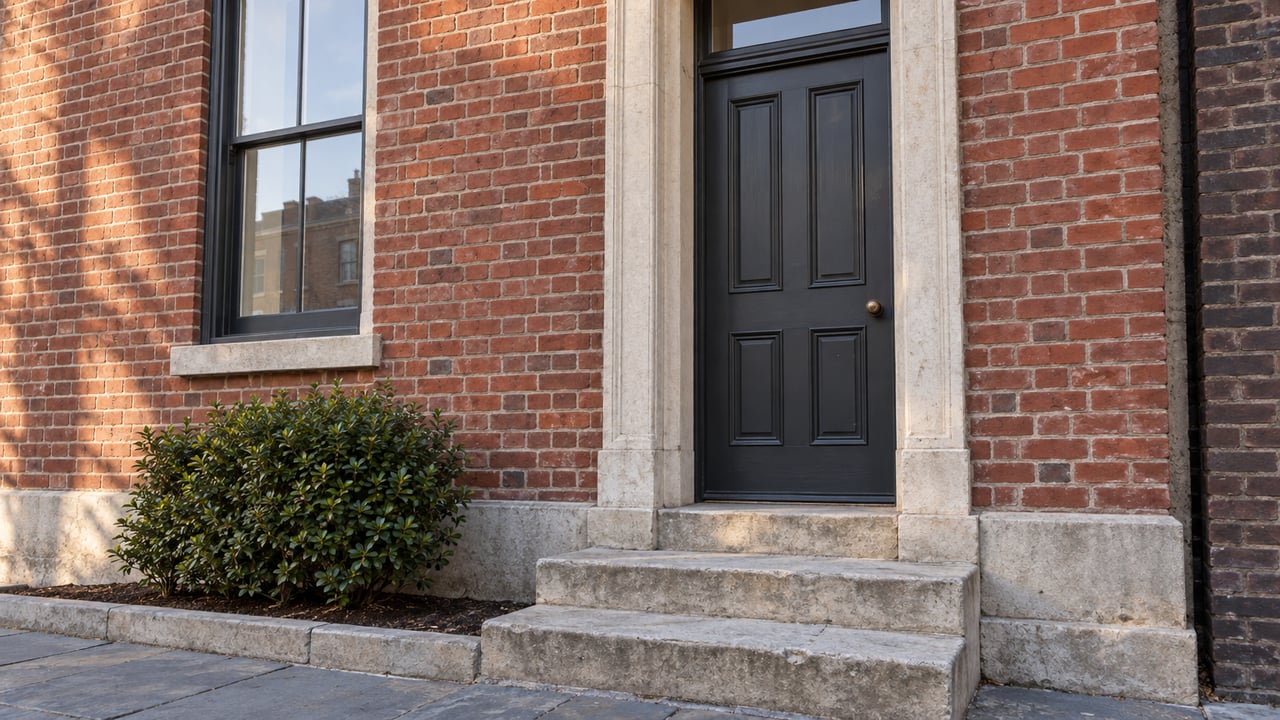
Walk down any block in Old Town Alexandria and you can usually spot two rowhouses that look close to identical from the sidewalk. Same brick, same stoop height, same three-bay façade. Yet one sells for $150,000 more than the other, and the gap has less to do with square footage than with something buyers rarely think to ask about: whether every exterior change the previous owner made actually cleared the city's Board of Architectural Review.
That single fact, that renovation history and BAR compliance can move price more than finishes do, is the thing a comps sheet won't tell you. And this fall, the rulebook that decides what counts as compliant is being rewritten chapter by chapter, which means the answer to "will my renovation get approved" is less stable right now than at almost any other point in recent memory.
What the Board of Architectural Review Actually Controls
Old Town sits inside two locally regulated historic districts, the Old and Historic Alexandria District and the Parker-Gray Historic District, out of seven historic districts recognized on the National Register within the city. Only those two, plus a separate list of designated 100-Year-Old Buildings citywide, fall under the Board of Architectural Review's authority.
The BAR's job is narrower than most buyers assume. It reviews exterior changes visible from a public street or alley, not interior renovations. Repaint the kitchen, replace the countertops, reconfigure a closet, none of that requires a Certificate of Appropriateness. But swap the front windows, add a dormer, build a rear addition, or demolish more than 25 square feet of material anywhere on the structure, and you need BAR sign-off before a building permit can even be submitted.
There are two tracks. Minor work, repainting in the same color, replacing roofing with similar material, small landscaping changes, gets an administrative approval from BAR staff, often within a few days to a couple of weeks. Anything bigger, additions, new construction, demolitions, significant façade changes, goes to a full public hearing. The board meets the first and third Wednesday of each month, except August, and a complete hearing cycle typically runs four to eight weeks from submission to decision. Exterior window and door projects commonly take two to four months from concept to permit once you count design revisions and scheduling. Larger additions run longer still, partly because they also have to satisfy Floor Area Ratio limits, the zoning tool that caps how much building a lot can carry regardless of what the BAR approves on appearance grounds alone.
| Project type | Review track | Typical timeline |
|---|---|---|
| Repainting (same color), roof repair with matching material, signage | Administrative (staff) | A few days to two weeks |
| Window or door replacement | Administrative or full hearing depending on scope | Two to four months, concept to permit |
| Addition, new construction, major façade change | Full BAR hearing | Four to eight weeks for the hearing alone, longer with FAR review |
| Demolition of more than 25 sq ft of material | Permit to Demolish required regardless of visibility | Runs alongside Certificate of Appropriateness review |
Skip the process and the consequences are concrete. Unauthorized construction in a historic district is a Class Two zoning violation, with fines that can reach $5,000 across a series of violations. Unpermitted work also has to be disclosed to a buyer, and if the city later discovers added square footage that was never permitted, the owner can be required to bring the space up to code, which sometimes means opening up finished work so an inspector can see how it was actually built. That is the mechanism behind the $150,000 spread. A rowhouse with a documented, BAR-approved renovation history is a known quantity. One with undocumented exterior changes is a liability an appraiser and a title company will eventually have to price in.
The Rulebook Is Being Rewritten This Fall
Here is the part that makes timing matter right now specifically. The Design Guidelines both historic districts operate under were written in 1993, and the city has spent this year replacing them, with the Board's own Design Guidelines Committee running the rewrite in public stages.
On August 19, the committee held its first community meeting at the Nannie J. Lee Recreation Center to walk through 11 updated draft chapters covering both districts. Public comment on those drafts ran from August 5 through September 2. Then on September 10, Planning and Zoning held a separate meeting on proposed amendments to Article X of the zoning ordinance, the section that actually governs the historic districts, after the city issued and then corrected a notice, confirming public comment would in fact be accepted. A follow-up committee session on September 23 at the Oswald Durant Center covered accessibility features, storefronts, paving, and parking, though that one was structured as an observation-only working session rather than a comment period.
The city's own zoning amendments page lists several more items with anticipated public hearings in Fall 2026: aligning BAR review standards across the two districts, cleaning up outdated ordinance language, clarifying what counts as routine maintenance versus reviewable alteration, and updating rules for ATMs and curb cuts in the historic districts.
Specific changes already drafted give a sense of where this lands for anyone planning renovation work:
- New standards for EV charging stations and small-cell wireless equipment, categories the 1993 guidelines never anticipated
- Parker-Gray's shed rules moving to match Old Town's, with structures up to 65 square feet and 8 feet tall newly requiring administrative review
- Utility meters in Parker-Gray losing an existing exemption and requiring staff approval for new or relocated placement
- Porches, decks, and planters facing revised review standards in both districts
None of this is finalized. It is being worked out in real time, chapter by chapter, through hearings that were still happening as of late September.
Why This Matters More Than the Median Price
Old Town's headline numbers look stable on their own. In 2024, zip code 22314 recorded roughly 650 closed sales with a median sold price of $870,500 and an average just over $1 million, homes moving in an average of 22 days and selling near 99 percent of list price. As of May 2026, the median list price had climbed to $1.31 million, or $763 per square foot, with homes spending a median of 18 days on market, ten percent faster than the year before.
Those figures describe demand. They say nothing about which specific property carries a renovation history that will survive scrutiny under rules that are still being drafted. That gap is exactly what the same-block price spread is measuring.
It is worth remembering that even the city's own flagship building isn't exempt from this process. City Hall's renovation went through BAR review for the Market Square site, received a Certificate of Appropriateness with conditions in November 2025, was appealed to City Council in December, and had those conditions affirmed in January 2026. If a municipal project with its own architects and staff still has to run the full gauntlet, a private rowhouse addition should expect nothing faster.
The upside case exists too. Cooper Mill, which opened in 2025 inside one of Old Town's last waterfront warehouses, kept the historic brick shell while building out a market, tavern, and event space inside it, an example of a renovation that worked with the review process rather than around it. That is the outcome the current rewrite is trying to make more predictable for smaller residential projects, even if the path to get there runs through several more months of hearings first.
A Few Direct Questions
Does the BAR review interior renovations, like a kitchen remodel? Generally no. Interior work is exempt unless it changes something visible from the street, such as adding a vent, skylight, or new window opening.
What if my house isn't in a historic district but is still old? Alexandria maintains a separate list of designated 100-Year-Old Buildings that fall under BAR review even outside Old Town and Parker-Gray. Not every century-old building is on that list, so it's worth confirming status before assuming either way.
Should I wait until the new guidelines are adopted before buying a fixer-upper here? Not necessarily, but budget uncertainty into the timeline. Projects submitted while chapters are still in draft form may be reviewed under a mix of old and new standards depending on when the board formally adopts each section. Reaching out to Preservation staff early, before you're under contract, is the way experienced buyers here avoid a surprise mid-renovation.
If you're weighing a historic Old Town or Parker-Gray property with renovation in mind, or you're already sitting on one and wondering how much of its past work will hold up under new guidelines, Bediz Group coordinates exactly this kind of project through its Fix-to-List process, from early conversations with preservation staff through contractor scheduling. Book an appointment before you write an offer contingent on work the current rulebook hasn't finished deciding on.